AI-Powered Tools for Quantity Surveyors and Senior QSs
Built for the people
who certify the claim.
Retention rules depend on the head contract. Your tools should know that.
You're certifying sub claims against actuals, holding retention on thesliding schedule the contract specifies, drawing down prov sums againstthe agreed code, and closing out final accounts that have to defendthemselves to a client. Excel doesn't know your head contract terms.
The audit trail lives in your inbox. One wrong retention percentage at certification costs the business at final account. Deep Space was built by construction experts who've sat in your chair.


What a QS day looks like on a commercial build
You live in the commercial mechanics. The certification, the calculation, the contract terms. Everynumber you put down has to be defensible six months later at final account.
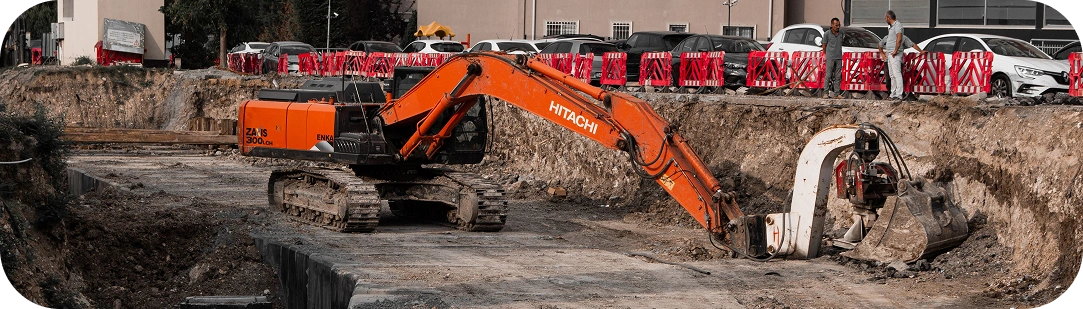
claims against actuals on site





QS is a particularly common title in NZ. In Australia the equivalent work often sits with a Senior CA. Either way, the role is the same: own the commercial mechanics, make every calculation defensible, keep the audit trail.
Where QS spreadsheets and legacy tools break down
Mid-tier commercial builders have never had a commercial platform that knows what a sliding retention schedule is. Too senior for what JobPac and Cheops were designed for. Too lean for the enterprisestack. You sit in the gap.
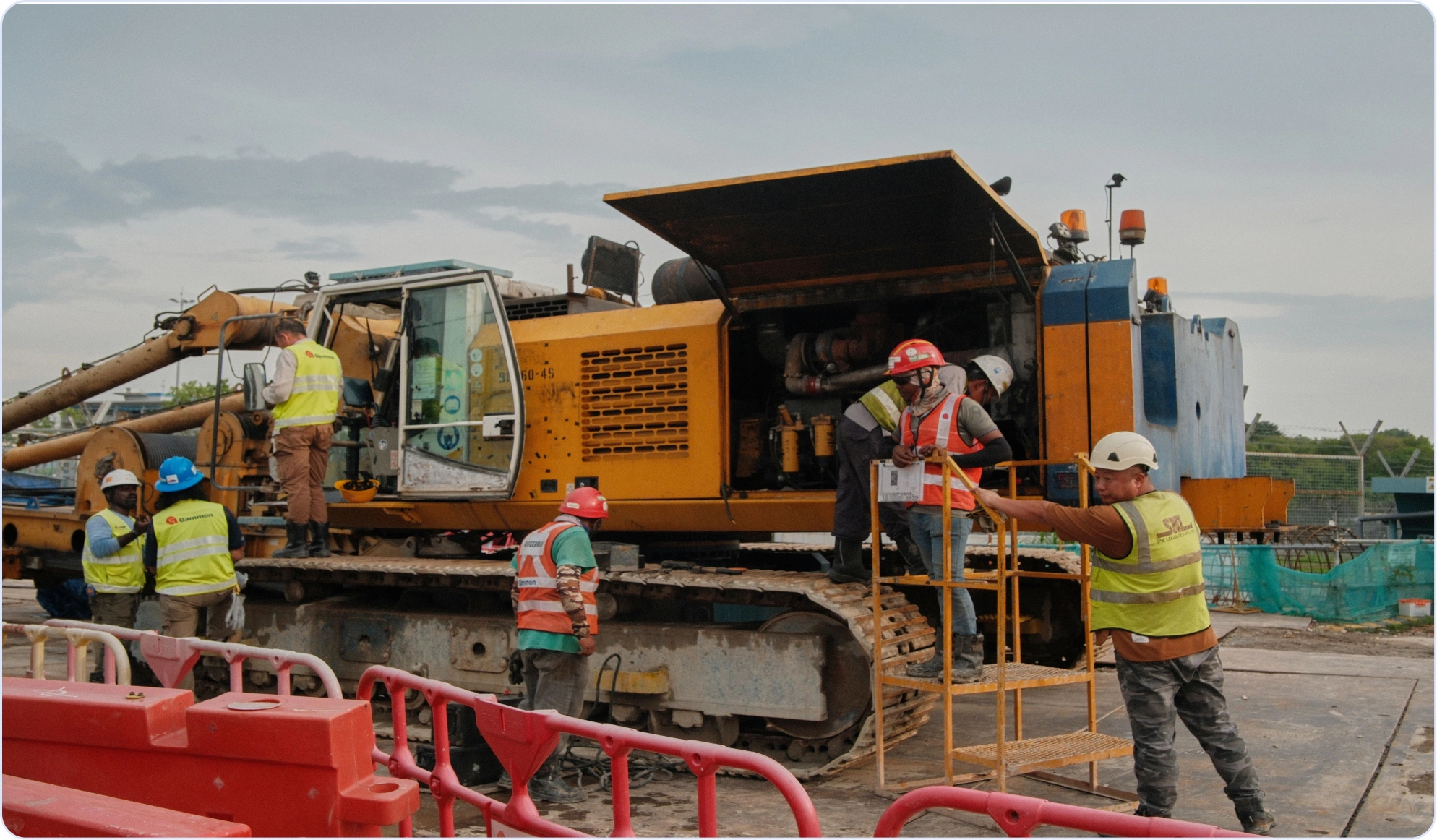
Project A holds 10 percent to PC, releases 5 percent at PC, holds 5 percent to end of DLP. Project B is aflat 5 percent throughout. Project C swapped the retention for a Bank Guarantee at month four. Your sheet has one column called Retention.
The drawdown happens at certification. The code mismatch is found at final account, six monthslater, when you're trying to reconcile the prov sum allowance against actuals spent. By then the trail iscold and the explanation reads like guesswork.
A sub claim comes in, you certify, you email the PM, the PM emails Finance, Finance pushes theschedule. When the sub disputes the certification two months later, you're searching Outlook for theexact wording you used.
You build the tax invoice (RCTI in AU,BCTI in NZ) in Word, fill it in by hand, attach it to the claim email. The GST treatment depends on the sub's ABN or GST registration, whether they're claiming GST inclusive or exclusive, and whether retention is held gross or net. One wrong line and the sub has a real complaint.
"The retention rules are different on every head contract. The sliding schedule, the release at PC, the percentage held to DLP. Excel doesn't know any of that, and one wrong number at certification costs us at final account."
.png)
How Deep Space handles QS workflows
Most vendors sell. We land. The difference is structural, not marketing.
Subcontract Payment Claim Certification
Certify claims against actuals, not against the sub's word. The full audit trail stays attached to the claim record, not buried in your inbox.
 Sub claim arrives via portal or manual upload, matched to the subcontract and the schedule of values
- Certify line by line against actuals on site, with the variance visible
- Approval threshold routes the certification to a PM or Commercial Manager where required
- The audit trail (who certified, when, against what evidence) sits on the claim record permanently
- Retention held automatically per the contract rules, not by hand
Excel sub claim trackers, certification by email, the question "what did we certify last claim" with no good answer.

Retentions Register
The register that knows your head contract. Sliding schedules, PC and DLP dates, Bank Guarantee swaps, all calculated by the contract terms, not by the sheet template.
- Set the retention schedule per subcontract: flat percentage, sliding tiers(10 / 5 / 1.75), or Bank Guarantee in lieu
- PC and DLP dates anchored to the head contract milestone, with release calculations dated correctly
- Release at PC, balance held to DLP, automated against the certified value
- Bank Guarantee tracking with expiry dates and reminder alerts
- Cross-project retention exposure ranked, so you see what's released and what's still held
Per-project retention spreadsheets, the manual calculation that breaks when a contract uses a different schedule, missed PC release dates.

Variations Pricing
Price the variation once. Track it from instruction through to claim. Link sub VOs to the head contract VO they roll into, so the recoverable position is visible from the moment it's logged.
- Price head contract variations against the agreed rates and markup
- Sub VOs flagged against the HC VO they support, with the recoverable margin calculated
- EOT and claim notice tracking against contractual timeframes
- Variation register exportable to defend a final account dispute
- Approval routing on variations above the project threshold
Disconnected variation registers per project, the recoverable position calculated by memory, email chains as the variation paper trail.

Provisional Sums
Every drawdown booked against the right code, with the audit trail attached. No surprises at final account, no reconciliation done by guesswork.
- Prov sum allowances loaded per cost code with the original budget value
- Drawdowns booked against the prov sum at certification time, with reason and evidence
- Running balance visible per prov sum, per project, per portfolio
- Final account close-out reconciles allowance against actuals automatically
- Variance exportable to support the client final account submission
Manual prov sum drawdown logs, Excel reconciliation at final account, the late-night six-month investigation into where the allowance went.

Final Accounts and Self-Billed Tax Invoices
Close out the head contract and the subs from one register. Generate the self-billed tax invoice (RCTI in Australia, BCTI in New Zealand) with the GST treatment the contract requires, every time.
- Final account view per subcontract, showing original value, variations, retention released, balance to close
- Head contract final account close-out with the full claim and variation history attached
- Tax invoice generation per claim with the right GST treatment (inclusive, exclusive, retention gross or net)
- Audit-ready export for the client final account submission or a dispute response
- Cross-project final account dashboard showing what's closed, what's open, what's at risk
Word tax invoice templates filled in by hand, final account reconciliation across spreadsheets and email, the dispute defence built from screenshots.

%20(1).png)
.png)
Used by QSs at ANZ commercial builders
Mid-tier commercial builders. Contracts between half a million and a hundred million. NZ-heavy, where QS is the standard role. Too big for JobPac and Cheops. Too lean for the enterprise stack.
Quantity Surveyor, NZ commercial builder
Senior Quantity Surveyor, ANZ mid-tierbuilder
Lead QS, NZ commercial builder
One audit-ready platform for every retention, variation, and final account
traceable.
Thirty minutes, no install, no commitment. We'll walk through a workspace configured for a builder your size, with the retentions register, the prov sum drawdown audit, and the final account close-out actually running.
.png)


.png)